
Stress Response Reset: Address The Root Cause of PTSD, Anxiety, Chronic Pain and More With The Stellate Ganglion Block
Samuel G Oltman, ND, RMSK
The Stellate Ganglion Block (SGB) is emerging from the periphery of pain medicine into the mainstream of mental health and trauma care. The SGB causes a physiological "reset" by targeting the engine of the body’s "fight-or-flight" system, improving and healing conditions from PTSD, anxiety, and dysautonomia, to Long COVID and chronic pain. Conventional treatments for severe Post-Traumatic Stress Disorder (PTSD) and generalized anxiety, while valuable, often require long-term adherence and may only offer partial relief, leading to frustration and chronicity. The evidence base now strongly suggests that the SGB provides a rapid, effective alternative that addresses the underlying neurobiological mechanism of trauma with 1 treatment lasting for months in most cases.

The Root Cause: Sympathetic Nervous System Overdrive
The core issue in all these wide ranging conditions is a sustained overactivity of the Sympathetic Nervous System (SNS), the “fight or flight” activator. The stellate ganglion, a nerve cluster in the neck, is a key hub in this stress response system. When this system is stuck in the "on" position after a traumatic event—leaving patients hypervigilant, irritable, painful, and unable to focus—the brain is locked in a perpetual state of “fight or flight” without a way to unwind or ramp down.
What is the Stellate Ganglion Block?
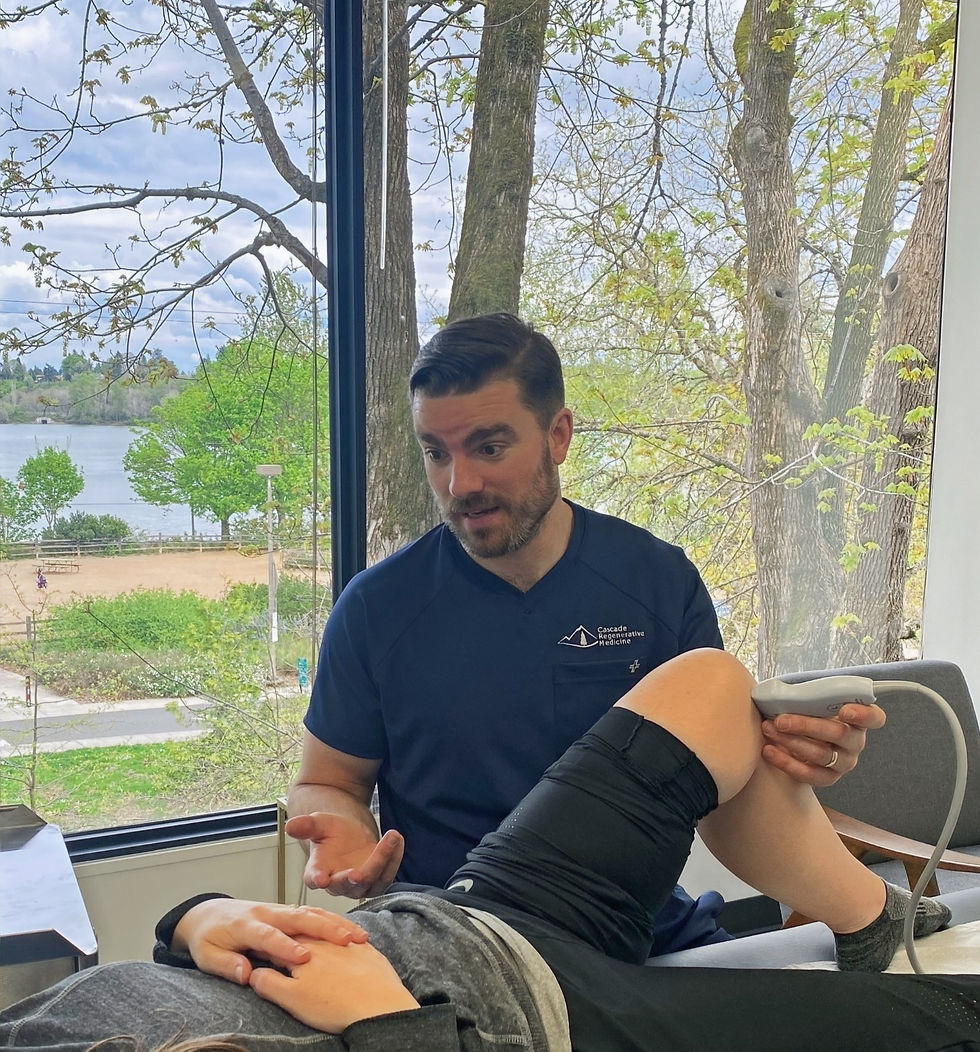
The SGB procedure involves injecting (under ultrasound guidance) a local anesthetic (Ropivacaine) next to the stellate ganglion, temporarily blocking the fight or flight signal. This disruption acts like a reboot for the entire system, allowing the SNS to be recalibrated and promoting healthier balance with the Parasympathetic Nervous System (the "rest and digest" mode).
Strong Evidence: Stellate Ganglion Block for PTSD and Trauma
Research has moved far beyond case studies. Randomized Controlled Trials (RCTs)—the gold standard of medical evidence—now support SGB's role in trauma recovery (1,2):
Significant Symptom Reduction: Studies have repeatedly shown that SGB results in a clinically significant and rapid reduction in PTSD symptoms, often within hours of the procedure. Patients typically see improvements in hyperarousal, anxiety, irritability, and sleep quality.
Targeting Hypervigilance: The mechanism of action directly addresses the persistent autonomic dysfunction that underlies the constant state of hypervigilance and distress in traumatized individuals.
Augmenting Therapy: SGB is also being explored as a powerful adjuvant therapy, providing a window of relief that can make concurrent psychological treatments, such as Cognitive Processing Therapy (CPT), more effective and tolerable for the patient.
Beyond Trauma: Stellate Ganglion Block for Chronic Pain and Anxiety
While its use in PTSD is the most widely cited, SGB's ability to modulate the autonomic nervous system makes it a promising therapy for other conditions rooted in sympathetic dysfunction:
Chronic Regional Pain Syndrome (CRPS): SGB has long been a recognized treatment for CRPS of the upper extremities, a debilitating chronic pain state characterized by sympathetic overactivity (3).
Long COVID and Dysautonomia: SGB is being studied for its effect on dysautonomia and emerging conditions like Long COVID syndrome (e.g., brain fog, fatigue, and POTS), which are theorized to involve sustained sympathetic inflammation or dysfunction (4).
Anxiety Co-occurring with Pain: For patients where chronic pain and anxiety are tightly intertwined—a phenomenon known as central sensitization—SGB offers a single, targeted procedure to down-regulate the nervous system, which can provide relief for both conditions simultaneously (5).
Concussion: Often occurring with other conditions, the physical trauma to the brain can leave the nervous system in a state of persistent fight or flight. This can be corrected with the SGB with a success rate over 85% (6).
A Shift Towards Mechanism-Based Treatment
The evidence for SGB reflects the broader approach we have here at Cascade Regenerative Medicine: a shift away from merely managing symptoms with pharmaceuticals and toward correcting the underlying physiological imbalances. By resetting the body’s central stress response, SGB offers a high-precision, low-risk approach to help patients exit the perpetual cycle of anxiety, trauma, pain and sympathetic overdrive, providing the foundation for lasting wellness. Contact us here and schedule today.
References:
Kerzner J, Liu H, Demchenko I, et al. Stellate ganglion block for psychiatric disorders: a systematic review of the clinical research landscape. Chronic Stress (Thousand Oaks). 2021;5:24705470211055176. doi:10.1177/24705470211055176
Hasoon J, Sultana S, Malik A, et al. Stellate ganglion blocks for post-traumatic stress disorder: a review of mechanisms, efficacy, and complications. Psychopharmacology Bulletin. 2024;54(4):106. doi:10.64719/pb.4505
Singh H, Rajarathinam M. Stellate ganglion block beyond chronic pain: A literature review on its application in painful and non-painful conditions. J Anaesthesiol Clin Pharmacol. 2024;40(2):185-191. doi:10.4103/joacp.joacp_304_22
Pearson L, Maina A, Compratt T, et al. Stellate ganglion block relieves long covid-19 symptoms in 86% of patients: a retrospective cohort study. Cureus. 2023;15(9):e45161. doi:10.7759/cureus.45161
Lynch JH, Mulvaney SW, Bryan CJ, Hernandez D. Stellate ganglion block reduces anxiety symptoms by half: a case series of 285 patients. J Pers Med. 2023;13(6):958. doi:10.3390/jpm130609581.
Mulvaney SW, Mahadevan S, Desronvilles RJ, Dineen KJ, Rae Olmsted KL. Three-month durability of bilateral two-level stellate ganglion blocks for traumatic brain injury: a retrospective analysis. Biomedicines. 2025;13(7):1526. doi:10.3390/biomedicines13071526


Comments